IN SUMMARY
Designing a professional office in a medical tower in Montreal involves multiple requirements. The layout should create well-defined and confidential spaces without neglecting comfort and atmosphere. Choose durable, easy-to-maintain materials and a warm, clean-cut design that feels professional, while adding subtle personal touches.
For a medical practice, setting up in an office tower offers a professional environment that is generally well located and accessible. Once you have chosen your location, the next step is planning the design of your medical office. The space must be functional, welcoming, and appealing—after all, you and your staff will be spending several hours a day there. Read on to discover the 5 tips of Groupe Accueil International Ltd. to help you create a successfully designed medical office.
1. Plan A Functional and Accessible Layout
Before thinking about the decoration, the first step is space planning. In medical towers such as those of the Groupe Accueil, you can undertake renovations to freely configure the space according to your specific needs.
First, make a list of the areas you need, then determine their location:
- Reception: Make sure it is clearly visible as soon as patients enter the office.
- Waiting room: Allow sufficient space based on the number of patients you typically receive.
- Restrooms: Make them easy to locate and clearly indicated from the waiting room area.
- Consultation room(s): Provide an adequate number to meet your practice’s needs.
- Storage room, laboratory or technical rooms, if necessary.
- Staff room (space for meetings and/or lunch breaks).
Be sure to define all required spaces before finalizing your layout. Accessibility must also be considered in your plans to accommodate wheelchair users:
- Clear floor space for easy movement;
- Sufficiently wide doors and corridors;
- Adapted restrooms;
- Reception area with a lower surface at the reception desk.
The accessibility of the office for people with disabilities is one of the advantages of our commercial buildings.
2. Protect Confidentiality
The importance of confidentiality goes without saying. Ensure that walls and ceilings offer adequate visual and acoustic insulation. If necessary, your building’s owners can provide information about the insulation of existing walls.
Also, consider arranging computer stations so that patients can’t read the information on the screen and store paper files in a locked room or secure filing cabinets. There should be enough distance between the reception and waiting area to help keep conversations private.
Tip: In addition to creating a calming atmosphere, soft background music can help mask conversations and enhance privacy.
3. Choose Comfortable and Easy-To-Clean Furniture
Furniture in a medical practice must meet health requirements, which sometimes means that comfort is secondary. However, they are both compatible!
For the waiting room, opt for seats that are firm yet comfortable. To avoid the cold feel of plastic chairs, consider materials such as imitation leather and vinyl that are easy to clean. When it comes to the furniture, choose sturdy, durable pieces with as few joints as possible.
Keep the same guidelines in mind when selecting office furniture. For medical staff, it is worth investing in ergonomic office chairs.

4. Design: Opt for Neutral and Soothing Tones
The visual atmosphere is the first impression patients have when entering your clinic. The goal is simple: create a calm and professional environment that doesn’t feel too cold.
For walls and furnishings, warm and neutral tones work particularly well in a medical setting. Consider off-white, beige or greige, or even touches of sage green or soft blue if you want to add some colours. The Scandinavian style, minimalist and warm, is often popular in medical practices.
5. Add A Touch of Personality
A medical office layout is more than a collection of functional spaces. Details that reflect your specialty, or even your personality, can help create a welcoming and pleasant environment for both patients and staff.
Here are some simple and effective ideas:
- Framed artwork or illustrations: Neutral paintings or those evoking nature are generally well suited to a medical setting.
- Greenery: A few plants can bring warmth and vitality to the environment. You can opt for high-quality artificial plants to avoid additional maintenance.
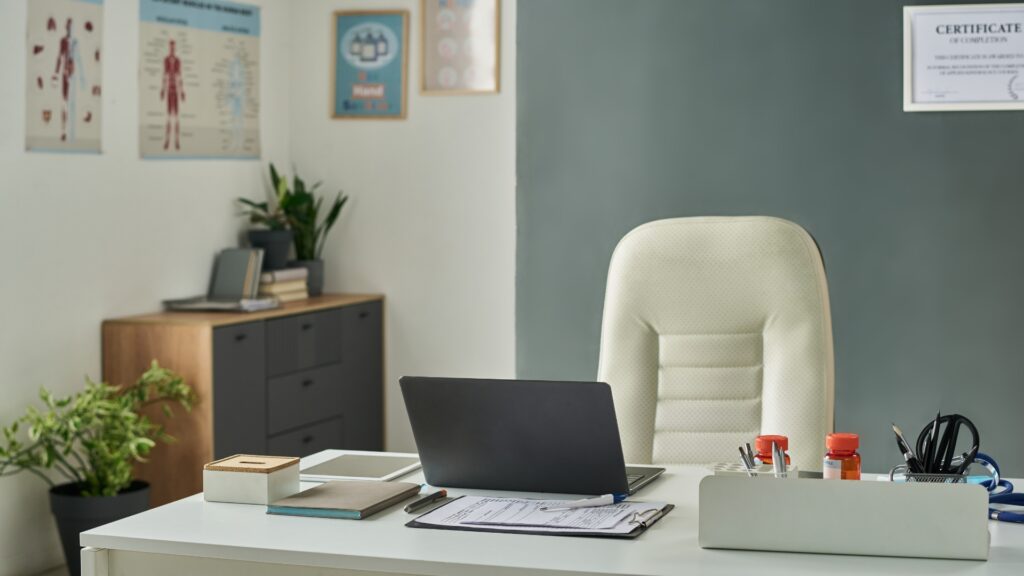
- A signature element related to your specialty: Anatomical charts, informative displays, quotes, selected important visuals, etc.
One or two decorative pieces are sufficient: Avoid visually overloading the space.
A Medical Office Design the Reflects Your Vision at Groupe Accueil
A well-designed medical office is based on a balance between functionality, comfort and aesthetics—while fully respecting confidentiality and hygiene standards. Groupe Accueil International Ltd. has specialized in medical office rentals for many years and understands the specific needs and constraints of healthcare professionals.
Our medical towers in Montreal offer several advantages, including the creation of a medical hub where many specialties come together. Our team can assist you with a customized layout plan or let you choose your contractor, depending on your preferences. Contact us to learn more or to schedule a visit.